
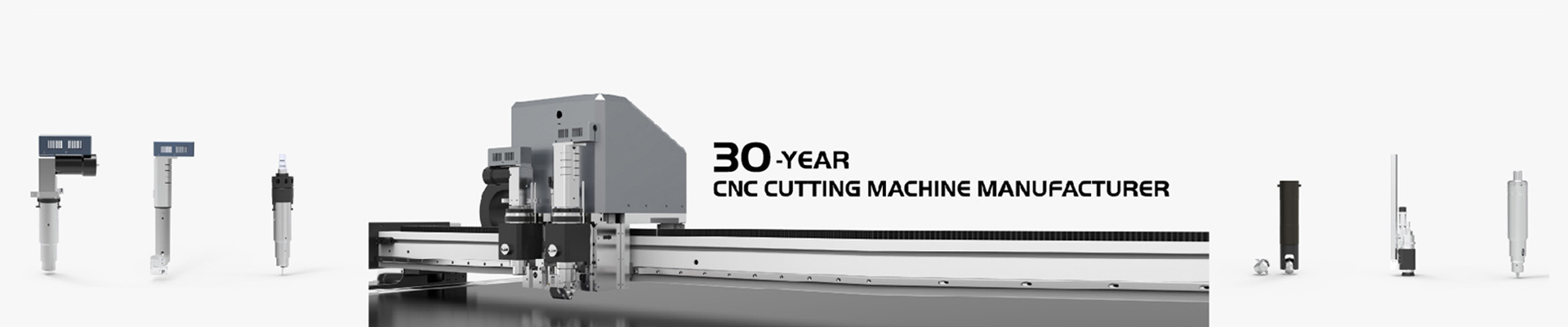
The PVC gasket manufacturing industry is undergoing a structural transformation driven by global procurement behavior, supply chain fragmentation, rising labor costs, and accelerating digital manufacturing adoption. Unlike previous cycles of industrial improvement, this shift is not incremental—it is systemic.Factories across Asia, Europe, and North America are reporting the same trend: traditional die cutting-based production systems are increasingly incompatible with modern order structures characterized by customization, small batch sizes, rapid iteration cycles, and engineering-driven procurement requirements.At the center of this transformation is the widespread adoption of digital cutting technologies, particularly the CNC oscillating knife cutting machine, which is redefining how PVC, foam, rubber, and sealing materials are processed.This is no longer a question of efficiency improvement. It is a question of production model survival.
Fragmentation of Demand Is Reshaping Manufacturing Logic
The most important structural change in the PVC gasket industry is the fragmentation of demand. Historically, gasket manufacturing was optimized for large batch production, stable long-term orders, fixed product specifications, and mold-based mass manufacturing. However, global industrial procurement has fundamentally shifted. Today, manufacturers are increasingly facing multi-SKU small batch orders, engineering-driven customization, rapid prototype requests, frequent design modifications, and shorter product lifecycle requirements. This transformation is especially evident in automotive interior sealing systems, HVAC insulation components, electronics protection materials, and industrial machinery sealing structures. As a result, production systems that rely on molds and fixed tooling are becoming structurally inefficient and less competitive in modern manufacturing environments.
Why Traditional Die Cutting Systems Are Losing Competitiveness
Traditional die cutting once dominated the industry due to its efficiency in mass production. However, in modern manufacturing environments, its limitations are increasingly exposed.
1
Mold Dependency Creates Structural Rigidity
Every product variation requires a dedicated mold. Even minor design adjustments trigger:
Tooling redesign
Manufacturing delays
Additional capital expenditure
Production interruption
This makes traditional systems fundamentally unsuitable for high-frequency product iteration environments.
2
Rising Cost Pressure Across the Entire Production Chain
Beyond visible manufacturing costs, die cutting introduces hidden structural expenses:
Mold storage and maintenance
Repeated sampling cycles
Engineering adjustment labor
Material waste during trial runs
Production line downtime
These costs accumulate over time and significantly reduce competitiveness in global bidding environments.
3
Lack of Flexibility in Multi-Order Environments
Modern factories are increasingly required to handle:
Mixed production batches
Frequent product switching
Short delivery deadlines
Die cutting systems struggle with this operational model due to long setup cycles and tooling constraints.
A major but often underestimated factor driving industry transformation is labor instability. Manufacturers globally report a shortage of skilled pattern makers, increasing wage pressure, an aging technical workforce, and high turnover in production roles. Traditional gasket manufacturing depends heavily on manual expertise for pattern design interpretation, material layout planning, cutting adjustment, and quality verification, which creates a bottleneck that limits scalability and increases operational risk. At the same time, global procurement strategy has shifted from price-centric decision-making to engineering capability evaluation. Modern buyers now prioritize suppliers who can demonstrate rapid sampling capability, engineering responsiveness, flexible production adaptation, high consistency across iterations, and short lead-time capability. In many cases, suppliers lacking rapid prototyping ability are eliminated during early sourcing stages, regardless of pricing competitiveness, fundamentally changing supplier evaluation criteria in international markets. To adapt to these structural pressures, manufacturers are increasingly adopting digital cutting technologies. Unlike traditional die cutting systems, digital cutting eliminates mold dependency and introduces a software-driven production model. The CNC oscillating knife cutting machine is a key enabling technology in this transition, allowing direct conversion from CAD design files to physical production output without tooling delays, fundamentally redefining production economics and shifting manufacturing from a hardware-dependent process to a data-driven production system.
AI Integration and Intelligent Manufacturing Systems
Modern production environments are increasingly integrated with digital and AI-driven systems, where advanced factories connect cutting systems with CAD design platforms, AI nesting optimization engines, ERP production planning systems, and MES shop-floor monitoring systems. AI-driven nesting plays a critical role in improving material utilization efficiency by optimizing layout patterns based on geometry, batch structure, and material constraints, which helps reduce material waste, human error, and operator dependency. In PVC gasket manufacturing, even small improvements in material utilization can significantly impact annual profitability. At the same time, environmental regulations are becoming a major factor influencing manufacturing technology adoption. Traditional cutting processes often generate thermal edge burning, smoke emissions, VOC-related environmental concerns, and high scrap rates. In contrast, oscillating knife technology is a cold-cutting process that eliminates thermal damage and significantly reduces environmental impact. This is particularly important for exports to European Union markets with strict ESG compliance requirements, North American industrial procurement chains, and automotive Tier 1 supply networks, where sustainability compliance is now a mandatory requirement rather than a value-added advantage.
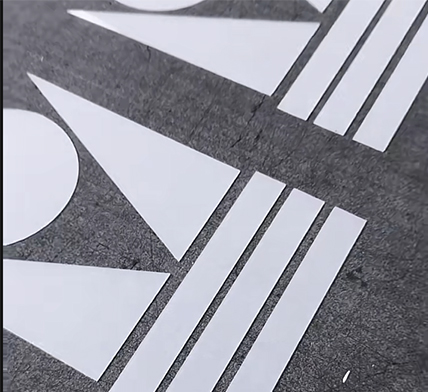
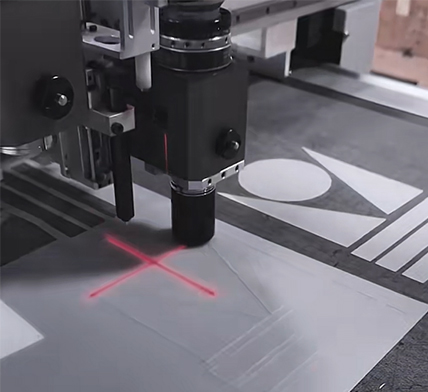
The shift from traditional die cutting to digital cutting is not a future trend—it is already happening across global manufacturing networks. Driven by fragmented demand, labor shortages, environmental compliance, and procurement evolution, manufacturers are being forced to rethink their entire production architecture. The CNC oscillating knife cutting machine has become a key enabler of this transformation, supporting the transition toward flexible, intelligent, and data-driven manufacturing systems. Companies that adapt early will gain structural advantages in speed, cost efficiency, and global competitiveness. Guangdong Ruizhou Technology Co., Ltd. Official Website: www.ruizhoutech.com