
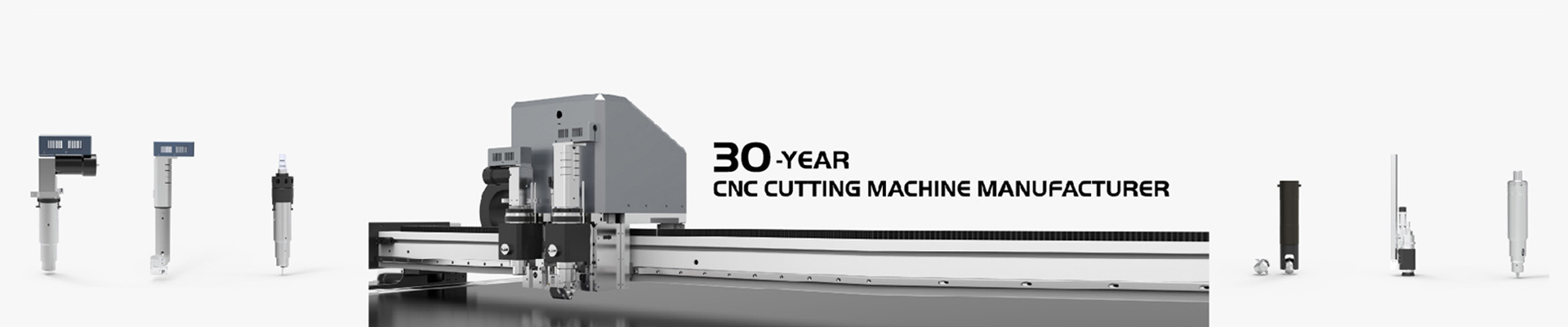
Modern manufacturing is entering a structural transformation that goes far beyond traditional automation. As global industries face increasing pressure from customization, shorter product cycles, and higher efficiency demands, factories are shifting toward intelligent, data-driven production systems.RUIZHOU, as a global manufacturer of CNC Cutting Machine systems, is actively driving this transformation by integrating artificial intelligence, industrial data models, and next-generation automation technologies. The result is a new era of AI Cutting Solution platforms that redefine how flexible materials are processed across industries such as footwear, automotive interiors, furniture, apparel, and packaging.
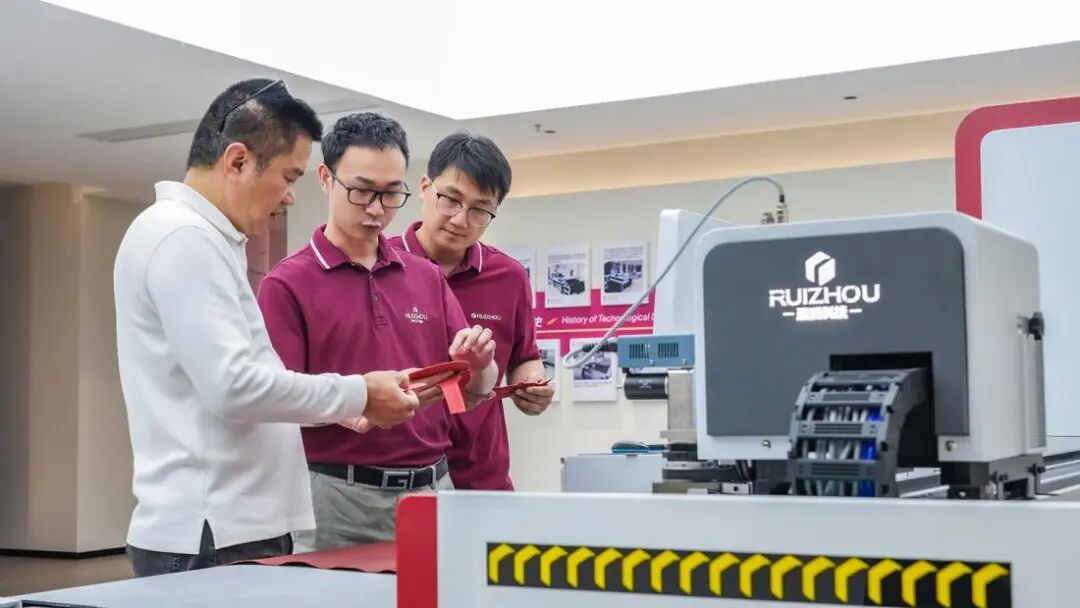
This article explores how manufacturing is evolving from machine-based automation to AI agent-driven intelligent ecosystems, and how this shift is reshaping the future of Flexible Material Cutting Machine, Leather Cutting Machine, and Automatic Cutting Solution technologies.
Why Manufacturing Is Entering the AI Agent Era
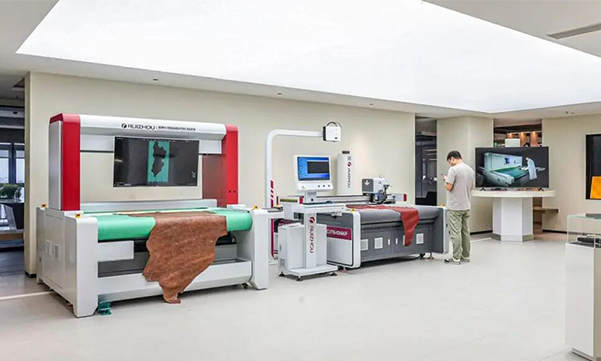
Modern manufacturing is undergoing a fundamental transformation. Traditional production systems were built around standalone machines and fixed workflows, where human operators played a central role in decision-making. However, this model is becoming increasingly inefficient in today’s dynamic global market.Manufacturers are no longer competing only on cost and speed. They must now compete on adaptability, intelligence, and system-level optimization.
AI agents introduce a new paradigm: instead of simply executing commands, they perceive production environments, analyze real-time data, and optimize decisions dynamically. This shift is particularly significant in industries that rely on flexible materials.Production environments involving CNC Cutting Machine systems are highly complex. Material variations, defect distribution, and order customization make traditional automation insufficient. AI agents solve this problem by enabling intelligent coordination across machines, materials, and workflows.In Leather Cutting Machine applications, this is especially important. Leather is highly irregular, containing natural defects and inconsistent textures. AI systems can detect these defects early, optimize nesting strategies, and significantly improve material utilization.This transformation marks the transition from machine-centric manufacturing to system-centric intelligence, where multiple machines function as interconnected nodes within a unified production ecosystem.
RUIZHOU’s Vision for Smart Manufacturing
1
AI-Driven Cutting Systems
With the integration of AI, modern Flexible Material Cutting Machine systems can now:
1.Detect material defects in real time
2.Optimize nesting automatically
3.Adjust cutting paths dynamically
4.Improve material utilization rate
This represents a shift from automation to intelligent decision-making.
2
Intelligent Cutting Workflow
In Leather Cutting Machine applications, AI integrates:
1.Material scanning
2.Defect detection
3.Nesting optimization
4.Cutting execution
into a single continuous workflow, reducing waste and improving efficiency.
3
Dynamic Production Optimization
Within Automatic Cutting Solution systems, AI dynamically adjusts workflows based on:
1.Material availability
2.Order priority
3.Machine performance
4.Production capacity
This ensures continuous optimization of manufacturing processes.
Why Data Has Become the New Production Asset
In intelligent manufacturing, data has become a core production resource. Every CNC Cutting Machine generates valuable operational data, including cutting paths, nesting results, and material scanning information.When combined with AI, this data enables continuous optimization. Modern AI Cutting Solution platforms use historical and real-time data to improve efficiency, predict outcomes, and optimize production strategies automatically.In Leather Cutting Machine applications, data analysis helps identify defect patterns and optimize material usage before cutting begins. In multi-machine environments, multiple Flexible Material Cutting Machine systems can share data to balance workloads and reduce downtime, forming a connected intelligent production network.
AI agents are transforming manufacturing from isolated machine operations into coordinated intelligent systems. In modern factories, multiple CNC Cutting Machine units can work together under AI coordination to optimize production efficiency and resource allocation.Within Automatic Cutting Solution systems, workflows are no longer fixed. AI dynamically adjusts production based on material availability, order priority, and machine status, ensuring continuous optimization.For Leather Cutting Machine applications, AI integrates scanning, defect detection, and cutting optimization into a single process, significantly reducing waste. At the same time, AI Cutting Solution platforms introduce predictive capabilities, allowing manufacturers to anticipate issues such as machine overload or material shortages before they occur.