
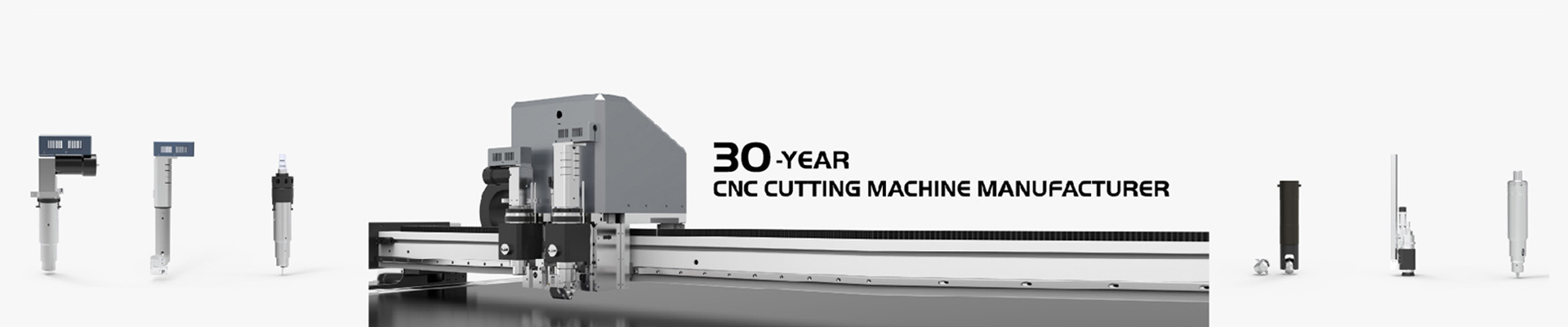
The global upholstered furniture industry is undergoing a rapid transformation driven by automation, digital manufacturing systems, and increasing demand for customized production. In regions such as Poland, where furniture manufacturing plays a significant role in industrial exports, factories are actively seeking solutions that can balance efficiency, precision, and flexibility.
At the center of this transformation is the adoption of intelligent cutting systems that replace traditional manual cutting processes. Among them, advanced CNC-based solutions are redefining how materials like leather, PU, fabric, and foam are processed in modern production lines.The question is no longer whether automation is needed, but how fast manufacturers can adapt to remain competitive.This article explores how intelligent leather cutting technology is reshaping the industry, and why systems like Ruizhou’s solution are becoming essential for next-generation furniture production.
Smart Manufacturing in the Polish Furniture Industry
Poland has become one of Europe’s strongest furniture production hubs, exporting upholstered sofas, chairs, and home furnishings worldwide. However, rising labor costs and increasing customization demands have pushed factories to modernize.
Manufacturers now face three critical challenges:
Handling diverse materials efficiently
Managing small-batch and customized orders
Reducing production costs while maintaining quality
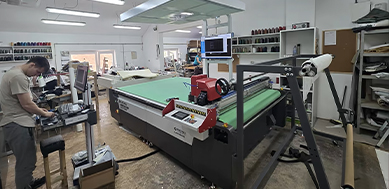
To solve these challenges, many factories are adopting automated cutting solutions that integrate intelligent nesting and full-process automation.This shift is not just technological—it is structural. Factories are redesigning workflows around digital systems rather than manual labor.
The Evolution of Furniture Cutting Technology
Traditionally, furniture manufacturing relied heavily on manual cutting methods. Skilled workers would use physical templates, knives, and manual nesting techniques to process materials. While effective in small-scale production, this approach presents several limitations:
High labor dependency
Material waste due to inefficient nesting
Inconsistent cutting precision
Slow production cycles
Difficulty scaling customized orders
As global competition intensified, manufacturers began to shift toward automated solutions. Early CNC systems improved precision but were still limited in flexibility. Today, intelligent systems integrate software, automation, and data-driven nesting to create a fully optimized production environment.This evolution marks a transition from manual craftsmanship to digital manufacturing intelligence.
What Makes Intelligent Cutting Systems Different?
Modern intelligent cutting systems are not just machines; they are complete production solutions that integrate AI-based nesting software, automatic material feeding systems, high-precision CNC cutting machine modules, and digital production management interfaces. These technologies enable manufacturers to shift from manual decision-making to data-driven production optimization, significantly improving efficiency and consistency. One of the greatest advantages is flexibility, allowing factories to handle both customized sofa covers and mass production without major setup changes, making the system a true backbone of modern furniture manufacturing.
Automation plays a central role in production efficiency by reducing manual intervention and enabling faster production cycles, lower labor costs, improved consistency, and reduced human error. The integration of intelligent nesting software further enhances material utilization by optimizing layout and minimizing waste, which directly increases profitability. In large-scale manufacturing environments, even a 3–5% improvement in material usage can lead to substantial annual savings, demonstrating the full value of advanced CNC cutting machine solutions.
Another key advantage is multi-material capability. Intelligent systems can process genuine leather, PU leather, textile fabrics, high-density foam, and composite upholstery materials with ease. Each material requires different cutting parameters such as pressure, speed, and tool configuration, and the system automatically adjusts these settings to ensure stable quality across all production tasks. This eliminates the need for multiple specialized machines, significantly reducing equipment investment costs while maintaining high production flexibility and efficiency.
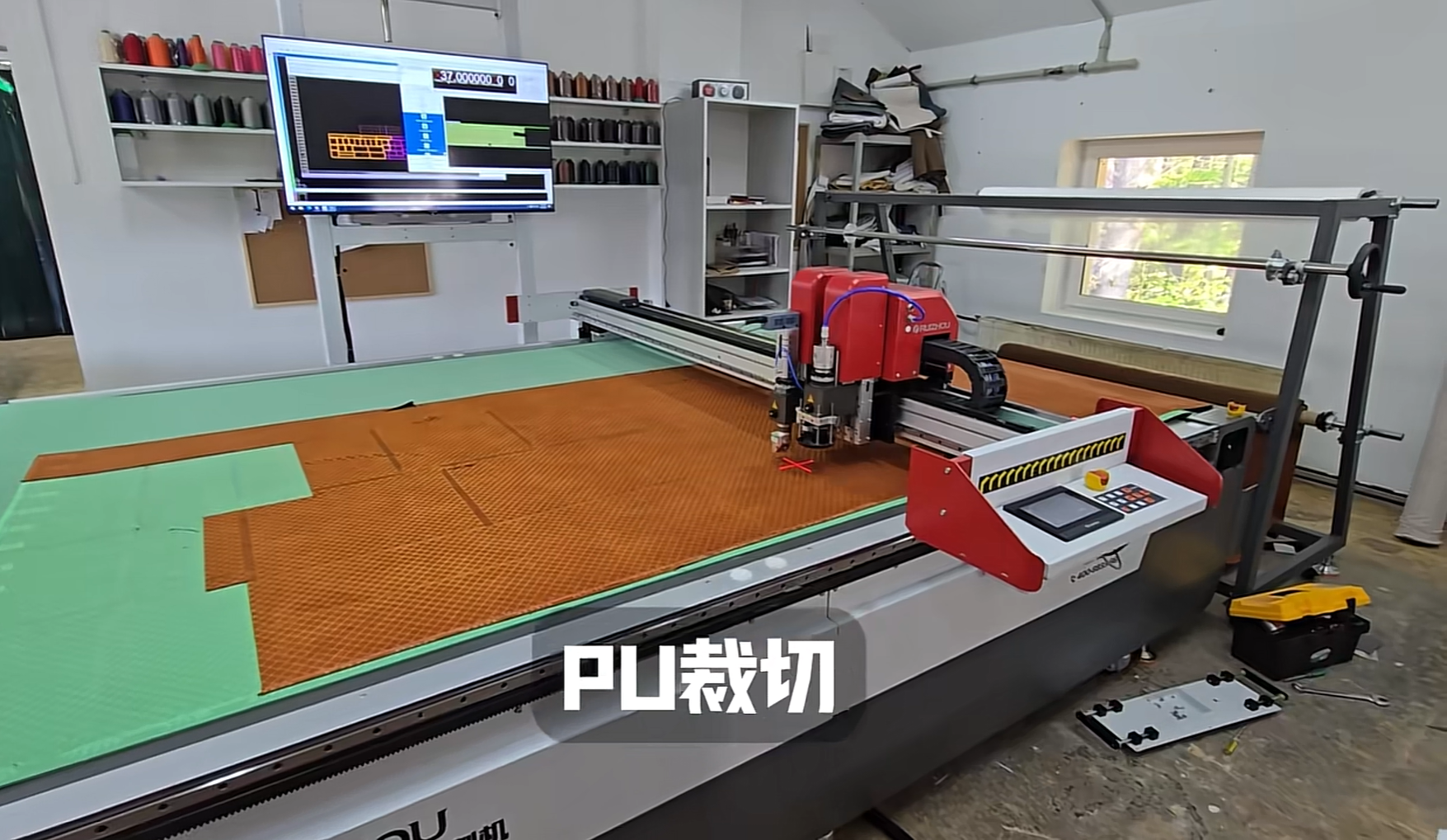
Precision cutting and quality stability are essential in upholstered furniture manufacturing, where components such as sofa covers, seat cushions, and decorative panels must meet strict dimensional standards. Intelligent cutting systems ensure consistent edge quality, high dimensional accuracy, reduced rework rates, and stable output across different production batches. Unlike manual cutting, which relies heavily on operator skill, automated systems deliver repeatable results regardless of production scale, making them crucial for manufacturers serving international markets with strict quality requirements. At the same time, modern systems support flexible production, allowing factories to quickly switch between product designs, efficiently handle small-batch orders, maintain high output in mass production scenarios, and reduce downtime between orders—providing a strong competitive advantage through the combination of customization and large-scale manufacturing capability. Another key innovation is intelligent nesting, which uses advanced algorithms to maximize material utilization by optimizing layouts based on shape complexity, material grain direction, cutting path optimization, and production order grouping. This significantly reduces waste and improves profitability and sustainability over time. In addition, digital workflow integration has transformed factories into connected production ecosystems where intelligent cutting machines operate as core nodes within a fully digital process, including CAD design input, automatic nesting optimization, production scheduling, automated cutting execution, and output tracking, greatly improving transparency, coordination efficiency, and overall production planning.
Smart Factory Transformation
The development direction of smart factories in the furniture industry is rapidly evolving toward highly integrated intelligent manufacturing systems. Key features include real-time production monitoring, data-driven decision-making, automated logistics systems, and predictive maintenance, all of which work together to improve overall efficiency and operational stability. Within this transformation, intelligent cutting systems serve as one of the foundational core technologies, enabling precise material processing and seamless integration into digital production workflows.
The upholstered furniture industry is accelerating its shift toward the era of smart manufacturing, where automated cutting systems are becoming essential for improving efficiency, reducing costs, and ensuring consistent product quality. For furniture manufacturers in Poland and around the world, intelligent upgrading is no longer an optional investment but a necessary strategy to maintain long-term competitiveness in a rapidly changing global market.
Learn more about advanced intelligent cutting solutions and global service support here: www.ruizhoutech.com