
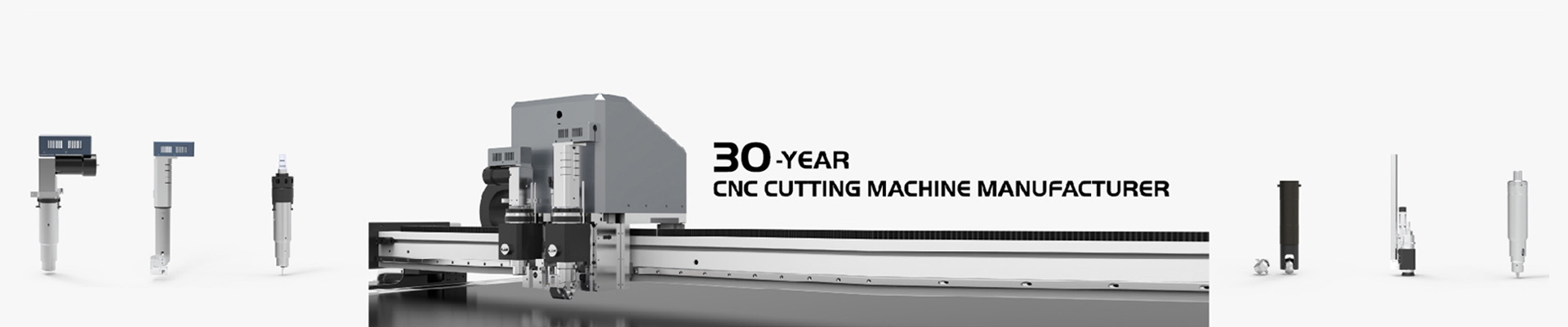
As manufacturers continue to improve insulation material processing, efficient and consistent cutting has become an important part of production. Materials such as aluminum foil fiberglass fabric require a cutting solution that can handle flexible composite structures while maintaining stable cutting quality.RUIZHOU recently demonstrated its Aluminum Foil Fiberglass Fabric Cutting Machine with a double-layer cutting application. The demonstration focuses on one practical production requirement: how to process two layers of aluminum foil fiberglass fabric efficiently with CNC cutting and projection-assisted positioning.Rather than relying only on machine specifications, RUIZHOU recommends testing the customer's actual material before equipment selection. Material thickness, fiber structure, coating, composite construction and production requirements can all influence the final cutting configuration.For manufacturers looking for a suitable Fiberglass Insulation Cutting Machine, the actual material test can provide a more reliable basis for evaluating cutting performance, workflow and equipment configuration.
Double-Layer Aluminum Foil Fiberglass Fabric Cutting Demonstration
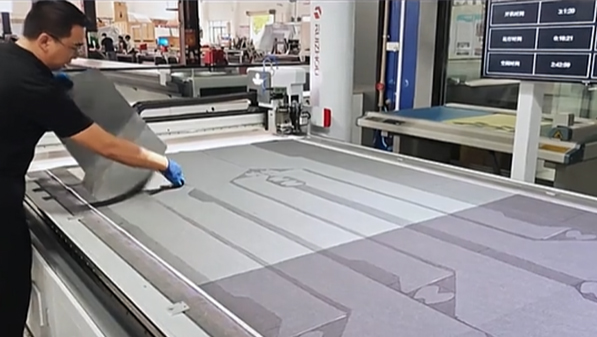
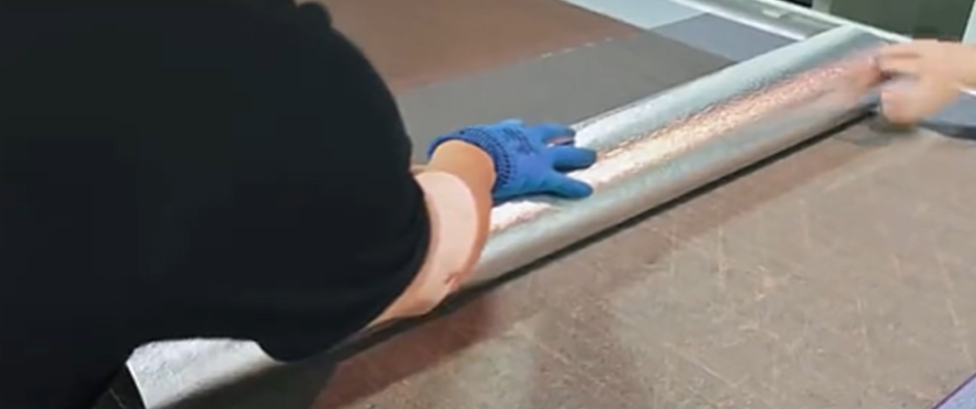
The featured application uses aluminum foil fiberglass fabric in a double-layer configuration. The material is positioned on the cutting table and processed according to the digital cutting pattern.Compared with manual cutting, a CNC-based workflow allows the cutting pattern to be prepared digitally and transferred directly to the machine. This helps reduce repeated manual measuring and makes it easier to process different product shapes.The purpose of the demonstration is not simply to show that the machine can cut fiberglass fabric. It is to demonstrate how a digital cutting workflow can be applied when manufacturers need to process two layers of composite insulation material.For production environments with multiple product specifications, this approach can also make model changes more convenient. Digital patterns can be prepared in advance, allowing operators to switch between different designs without producing a dedicated physical cutting die for every pattern.The result is a more flexible workflow for manufacturers handling different sizes, shapes and order requirements.
Why Double-Layer Cutting Matters for Insulation Material Production
Double-layer processing can help manufacturers improve productivity when the material structure and production requirements are suitable for multi-layer cutting.
However, double-layer cutting also places higher demands on material positioning and cutting stability. The two layers need to remain properly aligned during processing, while the cutting system must provide consistent movement along straight lines, curves and corners.For aluminum foil fiberglass fabric, the composite structure also needs to be considered. The aluminum foil surface and fiberglass layer have different physical characteristics, so cutting parameters should be selected according to the actual material rather than based only on its product name.This is why RUIZHOU focuses on material testing before recommending a final cutting configuration.A suitable Double-Layer Insulation Material Cutting Machine should be evaluated according to the actual thickness, structure, layer count, product size and expected production volume.
Projection Positioning for More Convenient Cutting
One of the key features demonstrated in this application is projection-assisted positioning.Projection technology can display the digital pattern directly in the working area. Operators can visually check the cutting outline and material position before processing.This can be particularly useful when working with irregular shapes, different product sizes or frequently changing patterns.The basic workflow can be understood as:Digital Pattern → Projection Positioning → Material Placement → CNC Cutting
Instead of repeatedly measuring the material manually, the operator can use the projected pattern as a visual reference for positioning.For manufacturers producing different insulation components, this can make the cutting process easier to organize and reduce unnecessary positioning steps.Projection is therefore not simply an additional visual function. In suitable production applications, it can become part of a more flexible digital cutting workflow.
Why Material Testing Matters
There is no universal cutting parameter for every industrial material. Even materials with similar names can have different structures and cutting characteristics, making actual material testing an important step before purchasing a cutting machine. Testing can help determine whether the material is suitable for knife cutting, whether single-layer or double-layer processing is appropriate, which cutting tool and speed are more suitable, how the material performs during cutting, whether the cut edges meet production requirements, and whether projection positioning can improve the workflow. For manufacturers considering an Insulation Material Cutting Machine, testing actual production materials can reduce uncertainty during equipment selection while helping RUIZHOU better understand the specific application. RUIZHOU welcomes manufacturers looking for aluminum foil fiberglass fabric cutting solutions to send material samples for testing. Customers can provide the material type, thickness, number of layers, product dimensions, drawings, expected daily output, required cutting accuracy, and current cutting method. Based on these details and the actual test results, RUIZHOU can evaluate the application and recommend a suitable cutting solution. If you are unsure whether your material is suitable for this cutting method, sending a sample for testing is a practical first step before making an equipment investment.
Send Your Material for Testing